SAT Reading & Writing

Reading and Writing looks unpredictable, but it's built from a fixed set of question types — and each type has a learnable approach. Grammar questions in particular follow rules you can master directly.

The question types

Reading & Writing content domains and their skills
DomainSkills tested
Craft and StructureWords in context, text structure and purpose, cross-text connections
Information and IdeasMain ideas, details, command of evidence (textual and quantitative), inference
Standard English ConventionsSentence boundaries, punctuation, verb agreement, pronouns, modifiers
Expression of IdeasTransitions, rhetorical synthesis (the bullet-point questions)

The approach that transfers to every question

Name the type, answer before you look, then eliminate. Identify the question type first. Answer it in your own words using only the passage, before reading the choices. Then eliminate choices that are true but off-topic, or that add claims the passage never supports. For grammar, isolate the core subject and verb before worrying about commas.

Grammar: learn the rules, stop guessing by ear

Standard English Conventions questions test a finite rulebook — sentence boundaries, commas versus semicolons, subject–verb agreement, pronoun clarity, modifier placement. Students who learn these rules directly usually stop missing these questions entirely. The fastest paths:

  • A condensed video rulebook (Penguin Test Prep's grammar reviews are excellent — below).
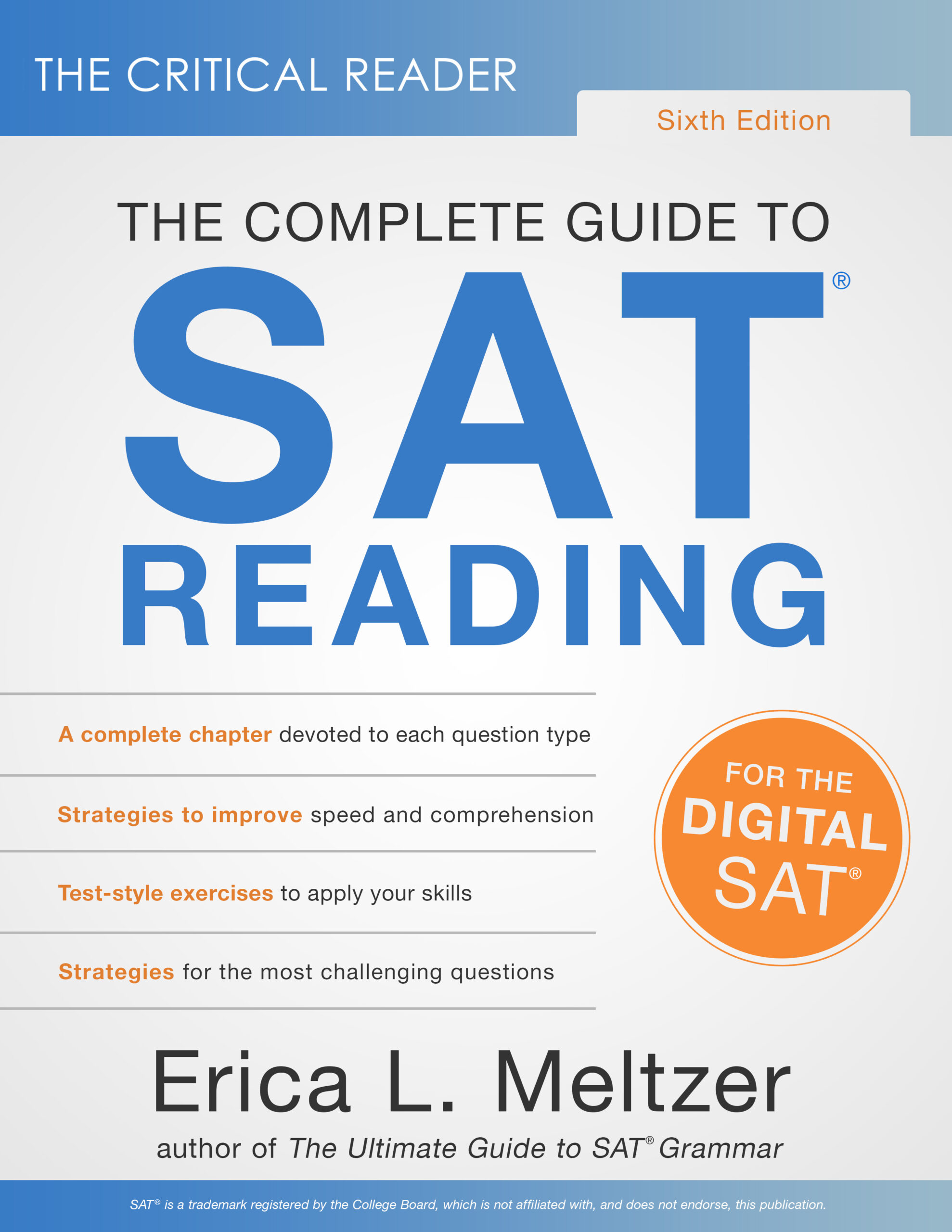
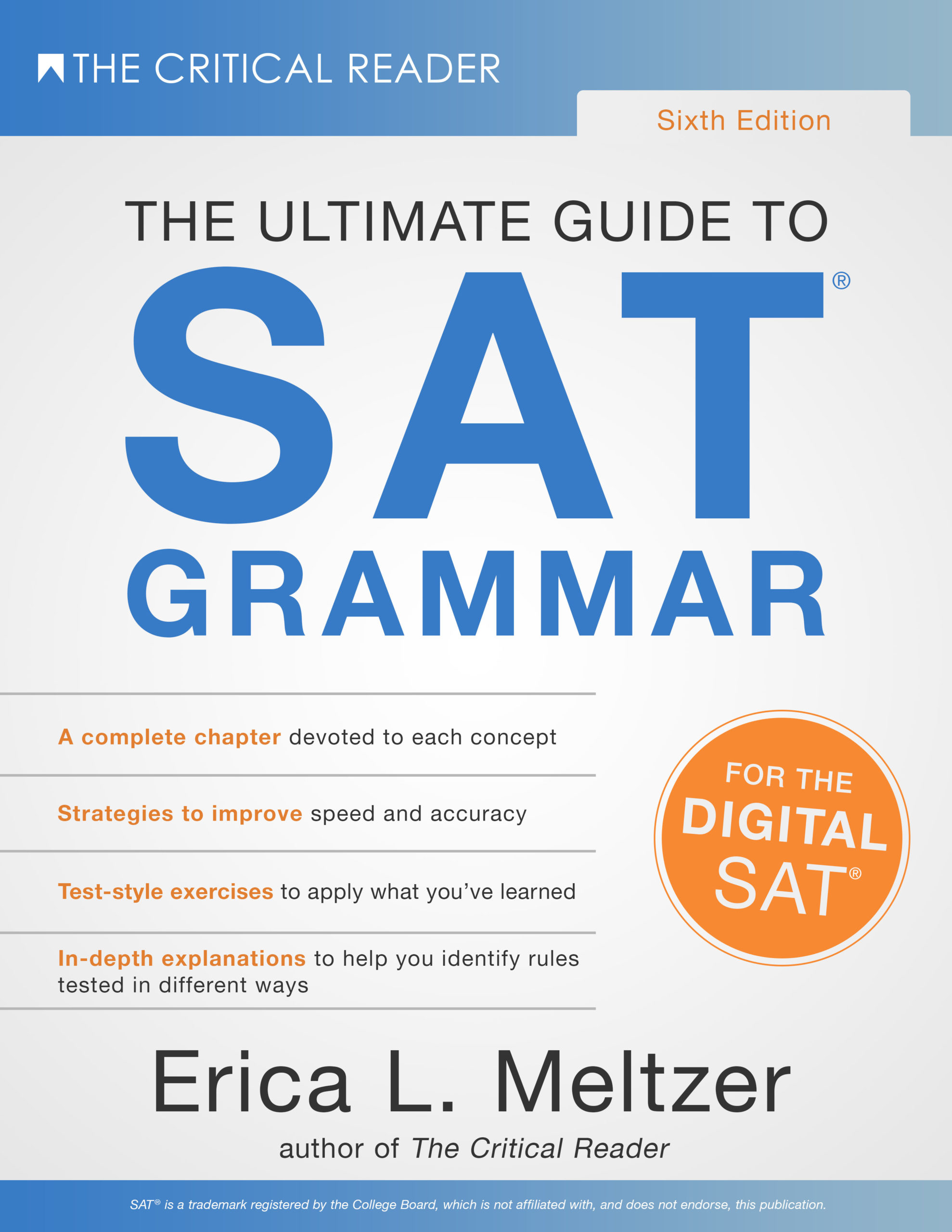
  • A systematic book (Erica Meltzer's grammar guide — the gold standard; see books).
  • Skill-filtered drilling in the official Question Bank (opens in a new tab) until each rule is automatic.

A note on vocabulary

Words-in-context questions draw on vocabulary that's hard to cram. If you're more than six months out, consistent reading is the best builder. Closer to the test, drill words-in-context questions specifically (Question Bank filter) and learn from every miss — the same academic words recur. Don't sink hours into memorizing thousand-word lists at the expense of grammar and reading practice, which improve faster.

Common Reading & Writing mistakes

  • Choosing "true but not the answer" — a choice can be factually consistent with the passage and still not answer the question asked.
  • Bringing outside knowledge — the correct answer is supported by the passage alone.
  • Guessing grammar by sound — spoken English tolerates things the SAT doesn't. Learn the rules.
  • Rereading the whole passage repeatedly — read once with purpose; the questions tell you what to look for.
  • Ignoring transitions' logic — "however" vs. "therefore" is a logic question, not a style question. Identify the relationship between the sentences first.

Best Reading & Writing resources

Learn and practice

Featured grammar video

Video channels for Reading & Writing

Completely Free

Run by an experienced tutor with a Master's in Education. Especially strong on SAT English: grammar rule breakdowns, compressed 'all of SAT English' reviews, and last-minute strategy videos.

Completely Free

A channel built around making digital SAT prep feel like a game — energetic walkthroughs, strategy videos, and study-motivation content aimed at self-studiers.

Completely Free

Brooke Hanson, a perfect-scoring SAT/ACT tutor, runs one of the most established free test-prep channels — strategy breakdowns, pacing, study schedules, and step-by-step Reading, Writing, and Math walkthroughs.

Books for Reading & Writing